

Why Climate Resilient Infrastructure Starts with the Ground
Climate resilience in infrastructure is often discussed in terms of systems, policies and technology layers. Yet the most common point of failure remains foundational. Roads, platforms and hardstands are increasingly exposed to water, load stress and environmental volatility that traditional construction methods were never designed to handle.
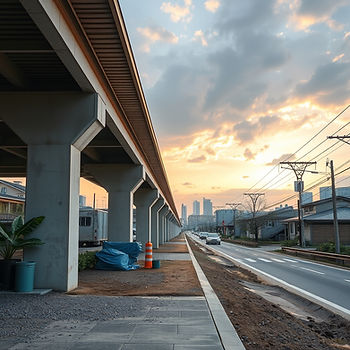
As weather patterns shift and infrastructure is asked to perform under more extreme conditions, the ground beneath projects matters more than ever. Water ingress, subgrade instability, and accelerated degradation can turn otherwise sound infrastructure into long-term liabilities. Resilience is not achieved through surface fixes but through materials and designs that anticipate stress rather than react to it.
This is where engineered ground solutions play a critical role. Infrastructure designed for durability must consider how load is distributed, how water interacts with materials, and how performance is maintained over time rather than measured at installation. Climate resilient infrastructure begins with acknowledging that failure often starts below the surface.
At Syngensis, we focus on supporting technologies that address these realities head-on. Polymercrete™ is one such platform, engineered for environments where water exposure and structural demands are unavoidable. Rather than retrofitting resilience after failure, it reflects a shift toward designing infrastructure that is prepared from the outset.
As investment in energy, industrial, and public infrastructure continues to grow, resilience at the ground level will increasingly define long-term success. The future of infrastructure depends not only on what is built, but on how it is designed to endure.


Comments